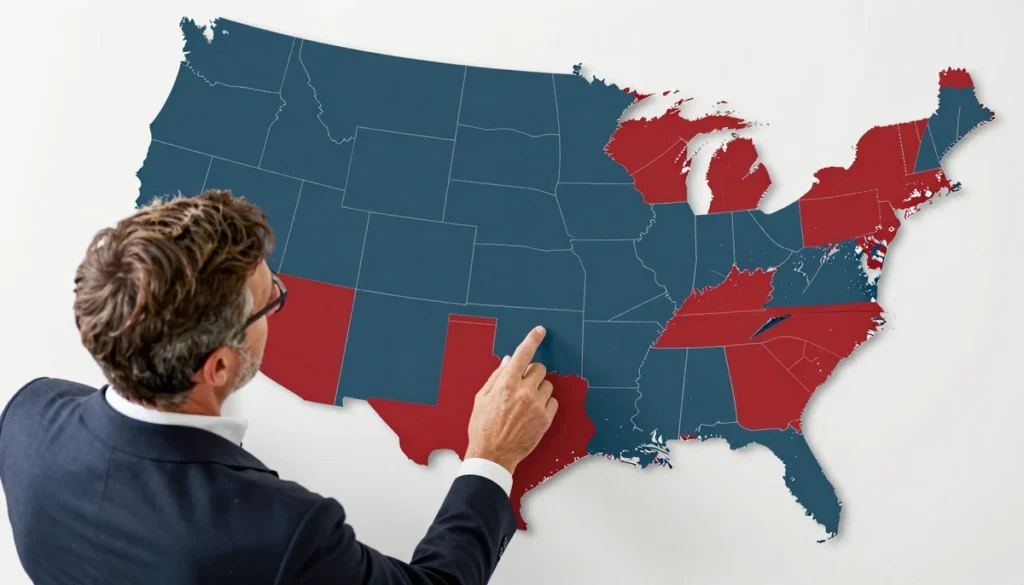
Cross a state line and an app that worked at breakfast can demand ID by dinner. Your IP address changed nothing about the law that made it happen.
Let me be blunt about what this article is not. It’s not a trick to “legally bypass” state restrictions — anyone promising that in a headline is selling you something worse than a subscription. What I can give you is the threat map: what actually changes at a state line, where the real dangers hide, and where a VPN legitimately belongs in your stack.
The scam wave rides the ban wave
Every time a state restriction makes the news, the same predators show up within days. Fake APK downloads “unlocked” for your state. Age-verification phishing pages that harvest exactly the ID documents people are nervous about. Free proxies that log everything through a crowded exit. The restriction gets the headlines; the credential theft gets your accounts. One more thing worth knowing — a bill you read about last month may be enacted, challenged in court, stayed, or not yet effective. Those are four different realities. Check the current official status before you change a single setting.
| Option | Immediate appeal | Hidden cost | Verification |
|---|---|---|---|
| Free proxy / unknown VPN | Fast, no payment | Crowded IP, unclear logging, excessive permissions | Owner, policy, permissions |
| Sideloaded “unlocked” apps | Feels clever | Malware, credential theft | Official stores only |
| Audited premium VPN | Stable encrypted route | Subscription, speed tradeoff | Refund-window test, audit scope |
Where a VPN actually belongs here
Three places, all boring and all legitimate: privacy from network observers, secure access on travel, and protection on untrusted Wi-Fi. An encrypted tunnel means the coffee shop, the hotel, and anyone between you and the internet reads a sealed vault instead of a postcard. That’s valuable every single day. What it doesn’t do — and I’ll say it once, clearly — is change your legal obligations in the state where you’re standing.
The boundary: a VPN does not erase accounts, cookies, device fingerprints, laws, or platform terms. Anyone claiming a workaround is “legal” without jurisdiction-specific authority is guessing with your risk.
Pick the tool on evidence
| Test | NordVPN | ExpressVPN | Surfshark | Decision rule |
|---|---|---|---|---|
| U.S. locations | Current check | Current check | Current check | Official server list |
| Kill switch by OS | Document | Document | Document | Forced-drop test |
| No-logs audit | Scope & date | Scope & date | Scope & date | Audit report |
| Refund & cancellation | 30 days | 30 days | 30 days | Official terms, recheck on publish date |
Feature support varies by OS. Vendor claims and independent audits are separate evidence — read the audit’s scope, not just its existence.
Three steps, in this order
- Verify the rule and its court status from a current official source.
- Install apps only from official stores, and turn on MFA everywhere.
- Use a VPN for lawful privacy needs — then run a DNS/IP leak test to confirm it’s doing its one job.
NordVPN official pricing · Surfshark official pricing · Proton VPN official pricing
💡 Before you pay: a 30-day refund window is enough to test leaks, speed, and app stability on every device you own. Use it.
Worried about what data brokers already hold on you? That’s the bigger file — start with the restricted-network guide for locked-down Wi-Fi, and check our Proton VPN 2026 review for the audit-first pick.
Some links are affiliate links; we may earn a commission at no extra cost to you. Prices are as of the publish date — verify on the official page.